Free Shipping + A Free Stainless Steel Water Bottle On Apparel Orders $125+ (U.S. ONLY)


Why the Guy Harvey Foundation Studies Sharks Year-Round — Not Just for Shark Week
Listen to article
Audio generated by DropInBlog's Blog Voice AI™ may have slight pronunciation nuances. Learn more
As the public turns their attention to sharks for 'Shark Week' every summer, the Guy Harvey Foundation and Guy Harvey Research Institute at Nova Southeastern University are focused on sharks all year long. Research conducted by the Guy Harvey Research Institute (GHRI) has greatly expanded our knowledge of sharks, including their natural history, the threats that they face, and led to significant management actions to help conserve these important species.
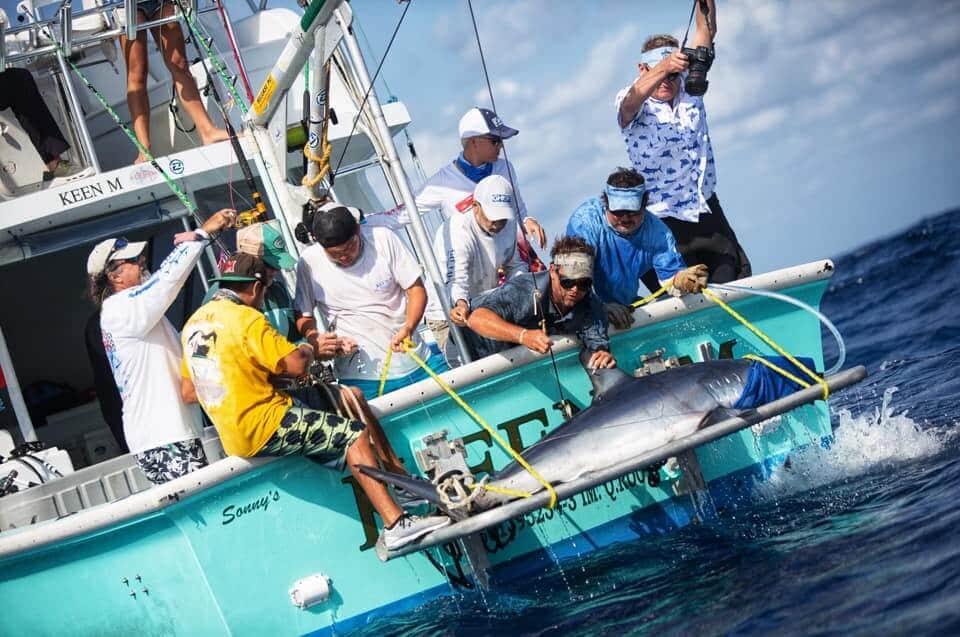
Using fin-mounted satellite tags, the GHRI has studied where select species of sharks travel around the oceans. The GHRI has deployed almost 400 satellite tags on shortfin mako, tiger, sand tiger, whale, oceanic whitetip, silky, Galapagos, and scalloped hammerhead sharks. Following shark migrations help managers better understand the regions and habitats that critical to sharks’ life cycles. All GHRI tagged sharks can be followed in near-real time at www.GHRItracking.org.
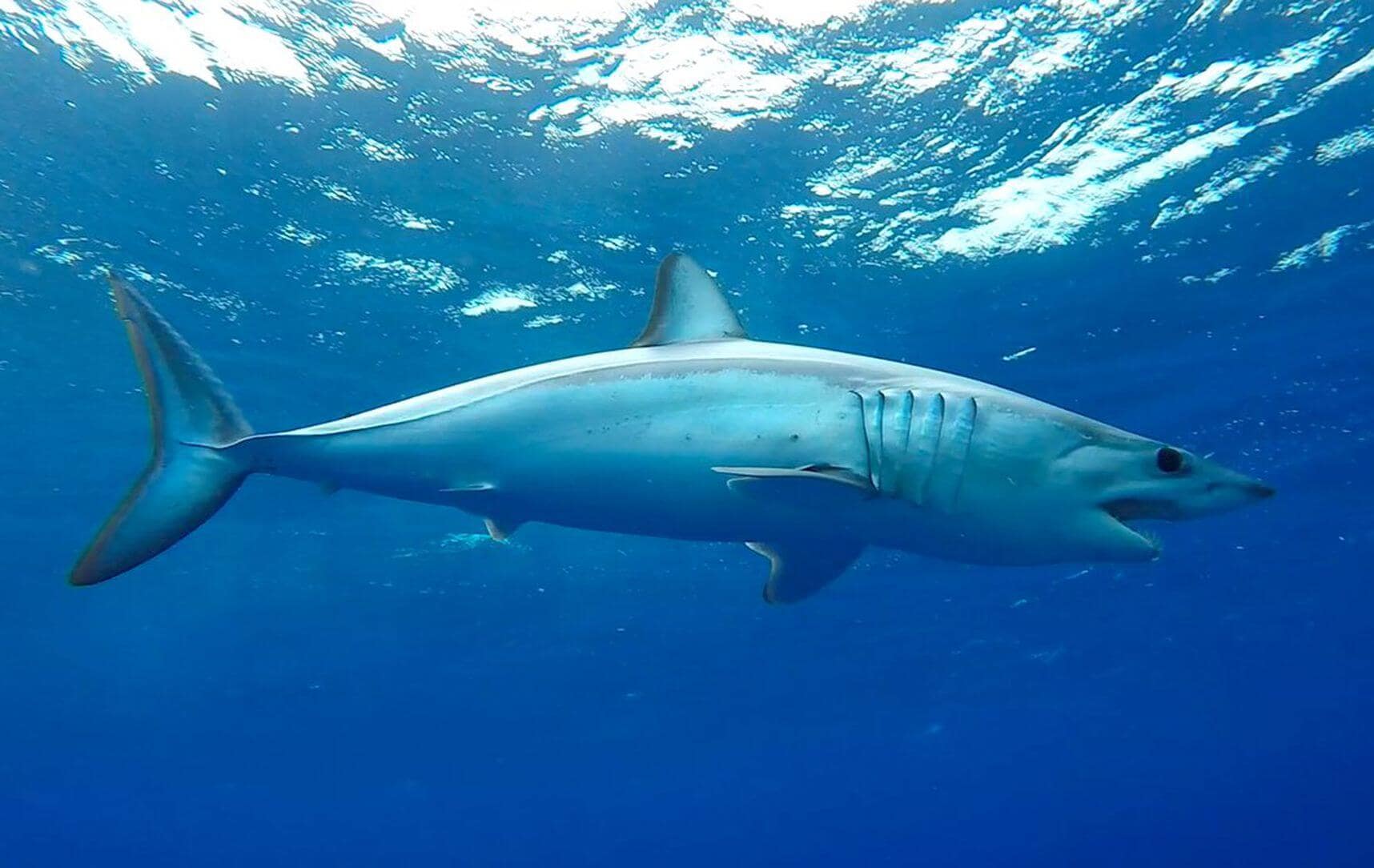
They can reach burst speeds of up to 45 miles per hour (72 km/h).
The tags deployed on shortfin mako sharks also had the unintended consequence of alerting GHRI scientists when a tagged shark was caught and harvested by commercial fishermen. These data allowed the researchers to derive, for the first-time ever, a fisheries-independent fishing mortality rate for the species. Shortfin mako sharks were being over-fished at a rate 10-times faster than originally thought! In turn, the international agency that manages mako sharks prohibited the commercial landing of this ecologically and economically important species.
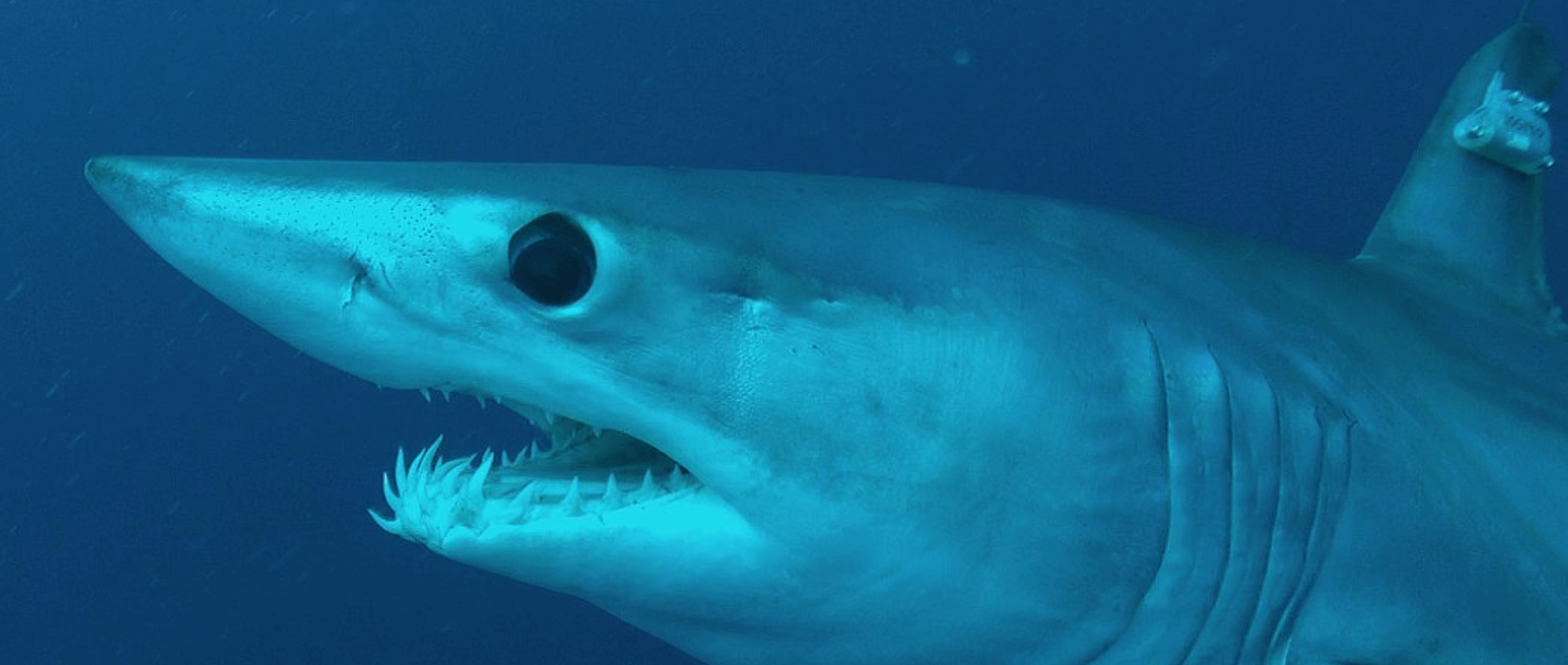 A Shortfin Mako Shark with a satellite tag that helps track routes and behavior.
 Other shark tracking studies have expanded the known range of species, established seasonal migration routes, proved that open-ocean sharks use coastal areas for pupping and nursery grounds, and helped establish shark sanctuaries around the world.
The GHRI is also at the forefront of genetic and genomic shark research. Using cutting-edge technologies, the GHRI was the first to estimate the fishing mortality of sharks to satisfy the shark fin trade (upwards of 73 million sharks per year), discovered new species of sharks, discovered parthenogenesis (virgin birth) in sharks, and was the first to decode the genome of great white, shortfin mako, and great hammerhead sharks. Understanding, on a genomic level, how sharks have become such successful species could have a great, positive impact on the future of human health and medicine.
Humans need healthy oceans and healthy oceans need sharks. As sharks take over our screens this shark week, it is important to remember that these animals need our attention all year long. The Guy Harvey Foundation and Guy Harvey Research Institute at Nova Southeastern University are proud to help lead the way in better understanding and conserving these keystone species.
🛒Shop Guy Harvey apparel, art and accessories with Shark Designs